
Have I Learned Anything?
Part I • Life is Hard

This piece began as a singular essay, but it didn’t take long for this little article to swell into something much too bloated to ask anyone to slog through.
So what follows is the first installment of a series. How many episodes there will be in the series — frankly, I just don’t know.

“Happy birthday.
At least you don’t have to worry about dying young.”
This was the cheeky message on the birthday card my sister Michelle sent me this year. Funny.
With the passing of yet another birthday and with my future birthdays dwindling in number, now is a good time to take stock of my perspective, of how I see things after these three-score and seven years on planet earth.
What Have I Learned?
This is the question at hand—have I learned anything? After all that I’ve witnessed and the places I’ve been and the many people I’ve known; after forty-three years of marriage to Esther and the raising of our daughter who left us far too early and a new life now with two remarkable granddaughters. After decades spent unsuccessfully seeking my place in pastoral ministry and wondering where I fit within the life of Jesus’ Church.
After a life spent in pursuit of a real world relationship with Jesus and sorting through the wildly diverse voices who claim to know the secret to getting there. Forever striving to understand Jesus and my connection with him and his connection with me. With all that has contributed to the battle between my limited understanding and my growing confusion…
…what have I learned?
What do I know to be foundational—about myself, about God, about people, about the world? But mostly about myself.
Anything that’s true about myself will come home to me only as I grasp foundational realities about this God who is at the same time knowable and unfathomable; about this bent and reeling world; about the wandering people around me and about the generations who came before me.
I cannot stand above them nor apart from them because they comprise the sum total of me.
A Hard Necessity
I have to warn you that these observations are going to seem obvious. But, as with so many inconvenient truths, though we might agree that they are indeed true, we can also instinctively forget them and if we can’t forget them, we banish them to the shadows where they lurk just out of sight.
I selfishly need you to witness my acknowledgment of these things. I know myself, that residing within me is a resistance, a built-in recoil, to what I know to be true, particularly when a sharpened truth hits its target and confronts my self-delusion. Within the privacy of my thoughts a familiar voice deceptively whispers to me that I’m somehow exempt from the truth. The voice is familiar because it’s mine.
The First Truth
But we who belong to Jesus understand that the truth makes us free. Not only religious truth or moral truth, but whatever is true. In making this statement about truth and freedom, Jesus was merely saying how it is—a truth in itself—that his words are reliable and if we live in them we will be liberated from the artificial life that is propelled by the lies we tell ourselves. To belong to Jesus is to have our world upended as we surrender to the truth of what is real, what is actual, about God and ourselves and the world around us.
Maybe this is the foremost observation for me—the first truth that leads to all others. That freedom comes when I allow myself to be confronted by undiluted reality. I can’t be helped if I merely acknowledge what is plainly so. I’m still likely to flinch and turn away or, at least, rationalize it into something else. Real liberation comes when I embrace the actual—when I force myself to look full-on into the mirror, no matter how disfigured the reflexion might be.
So here goes.
• • • • • •
Life is Hard
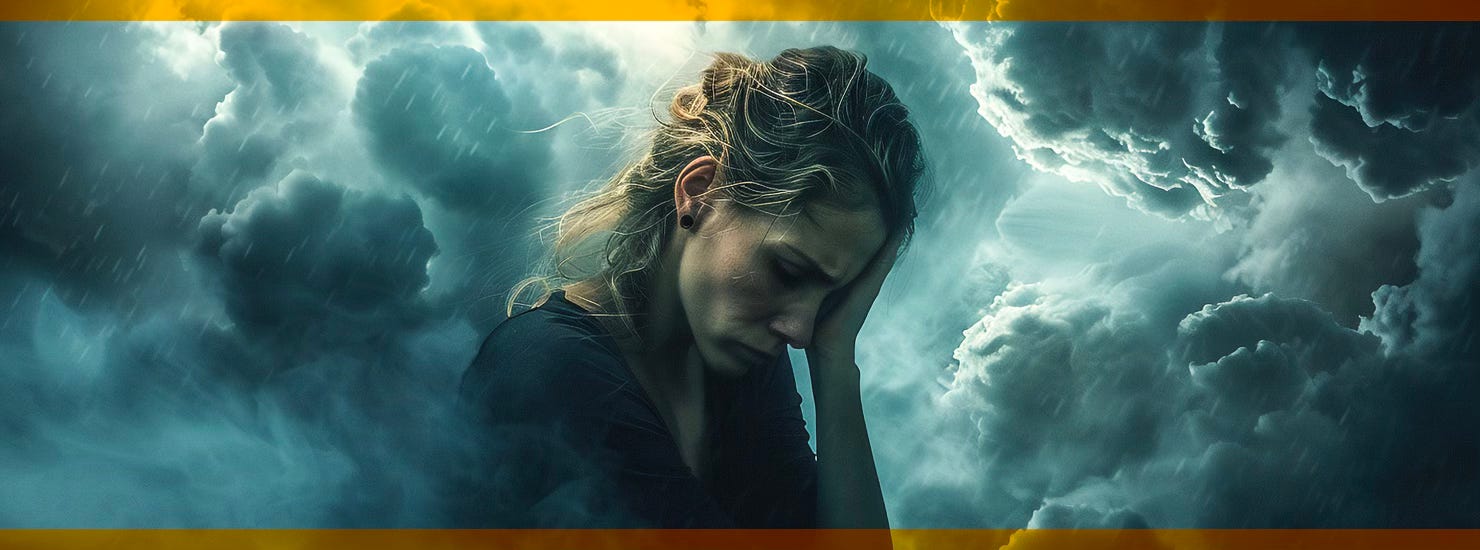
This is Undeniable Truth Number One.
I want good to come after me
Half as relentlessly as trouble does
Like a curse
I want health to protect me
Invade and infect me like disease does
But in reverse
Bob Bennett • • from his song Joy Deep as Sorrow
I was in my early thirties when I first read M. Scott Peck’s The Road Less Traveled, a book I have revisited many times since. Dr. Peck opens the first chapter with an observation so obvious that it shouldn’t have to be said out loud…
“Life is difficult.”
You don’t say.
Dr. Peck continues…
Most do not fully see this truth that life is difficult. Instead they moan more or less incessantly, noisily or subtly, about the enormity of their problems, their burdens, and their difficulties as if life were generally easy, as if life should be easy.
I don’t need a psychiatrist to tell me that my life is hard, but I must admit that when I’m confronted with unpleasant responsibilities and circumstances or unthinkable losses; or when people and events disappoint me in some offensive or painful or annoying way, I tend to react with anger and resentment, as though I’ve been dealt a grave injustice. I reflexively look for the nearest off ramp by finding someone to blame or following the least resistant path.
Dr. Peck argues that while I may know in a general sense that my life is difficult, I refuse to really see it, to recognize it full-on. He’s right of course. I’m indeed guilty of pretending that my life should be easier, that I deserve better.
Something Has Gone Horribly Wrong
The simple fact that I expect something easier is ample evidence that something has gone very wrong, not only with me, but with the whole human experiment. The surprise itself is an indication that within me resides a distant memory of what perhaps used to be and what certainly ought to be—and what hopefully could be again.
We all know life should be different, but we can’t quite pinpoint how it should be different. We simply know that things should be better than this.
Knowing this, we set our sights on discovering ways to make our world more pleasant, even if our solutions provide only momentary bliss. We concoct feel-good potions that lift our moods; we place our hope in therapists who help us navigate our troubles; we entertain ourselves with real and imagined heroes whose wins become our wins; and we lose ourselves in high resolution screens in search of anyone who promises to help us feel better.
We religious types pursue our own peculiar paths to a better world. We shape our explanations of God and Scripture around the thin promise of a more pleasant life. We cleverly recast our scriptural and cosmic authorities as advocates for our personal relief, marketing promises of financial abundance and immaculate health and a world where our moral superiority reigns supreme. These efforts operate under the willfully misguided assumption that God wants for his children a life free of pain and adversity.
After millennia spent chasing a better world, how are we doing?
A Better Place?
Conversations at a typical funeral reveal our collective recognition that life isn’t as it should be. Unsure of how to console grieving friends and family, well-meaning folks inevitably express a notion that is meant to comfort: We’ll surely miss Aunt Gertrude, but we are comforted in knowing she’s in a better place.
A better place? Where is this place and how is it better? The platitude rings loudly with the implication that where we are right now isn’t as it should be. The next place—wherever and whatever that is—has got to be better than this.
Each of us nurtures our own ideas of what a better place would look like. My notion of that place is one where I’m free from the struggle of living. Aside from the more trivial annoyances I’ll happily leave behind—the IRS, dust bunnies and country music, just for starters—the better place I imagine would be a final graduation into a new life where I don’t have to struggle to find my place in the world. I’m also banking on St. Paul’s promise that I’ll be truly understood, that I’ll be known. I won’t feel obligated to live in the apologetic way that I do now.
In that better place I’ll see clearly in ways that are simply not possible here and now. St. Paul also tells me I’m currently limited in what I can see, that I’m squinting into a dim mirror, that my reflection is muddied by the distorting effects of my sin. But on that better day, in that better place, the image will sharpen into liberating clarity—I will see myself fully and clearly and I will be seen and known by others, fully and clearly. I feel this potential almost viscerally and I long for it.

Homecoming
When I think of home, my house and its furnishings aren’t the first images that leap to mind. Home is where I find Esther and my granddaughters and their dad and George our Schnauzer. Addresses come and go, but our true home is found with the people we love and with those who love us.
Our first parents were born into and lived in and enjoyed all the benefits of God’s home—a lush garden to be sure—but Eden was their home because of intimacy with their Father and the sharing of their lives.
I like to believe that it took decades—even centuries—for a snake in the grass to rupture the deep relationship between Adam & Eve and their Father.
Having severed the relationship, the First Couple was evicted from their utopian home, the garden now replaced with thistles and back breaking labor. The tragic consequence of their blunder has rippled through their family tree, reaching all the way to us.
Yet there remains in each of us a residual memory of the garden—what Morpheus called a splinter in our minds—a longing to return to our home, to that better place of intimacy with our Father.
In his account, St. John includes a specific promise Jesus gave to his friends and, by extension, to me: the reassuring and hopeful message that my home awaits me—rebuilt and customized just for me.
But is it a building, an elegant villa that awaits me? Possibly. But with that same guarantee, Jesus was careful to reinforce the truth that my true home is God himself. Whatever the magnificence of the infrastructure, without my Father’s presence it’s mere real estate. But he will be there, watching for my arrival, waiting with open arms.
Precious Pains
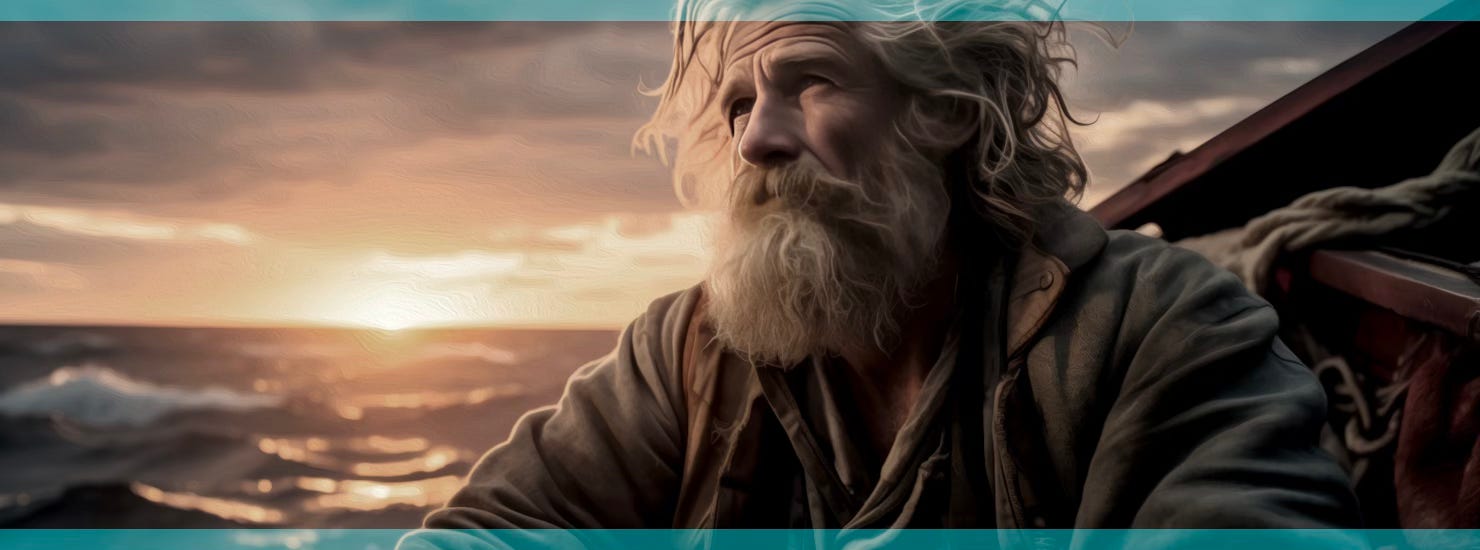
Sixty-seven years into my life, I have concluded that life is indeed difficult. There’s no denying it. But I also know that you and I were not designed to suffer—this isn’t what our Father had in mind for us. At least, not the kind of debilitating misery that over a lifetime erodes our spirits and wears us down.
Jesus warned us that life in this world would indeed include its share of trouble; but he comforts and assures us that he has overcome the world. I take him to mean that, yes, the adversity is all too real, but it’s temporary—a wisp of smoke in comparison to our eternal connection to him. His promise is that our troubles won’t destroy us as long as our lives are rooted in him.
I’m looking forward to the day when demoralizing hardship will cease for me—in all its forms. That’s the promise, that when Jesus returns to make all things new, tears will be wiped away, sorrows will evaporate, suffering will be a distant memory.
Truest consolation comes to me with the understanding that such a future was bought and paid for with Jesus’ own hardship, his own suffering. Jesus’ pain and torment was the path to the ultimate defeat of our suffering and death.
But maybe the greatest mystery is found in this: Jesus’ victory didn’t abolish my pain and hardship, at least not here and now. Instead, he miraculously turned these enemies into our friends, allies who serve to move us forward in reflecting the character of Jesus himself. Our hardships no longer whittle us away bit by bit; they instead build in us the Image that reflects our Father’s original vision.
I hate that life is Hard -sometimes it feels lighter and not as hard -when we hear the laughter of these sweet girls
I can say I love the truth and still resist it when it starts telling the truth about me. And yet the Lord keeps meeting me there with kindness and correction.